10 Things That Matter More Than the Newest AI Model
Every week brings another model release. And every week, somewhere, a team decides the reason their AI initiative is stalling is that they are on the wrong model.
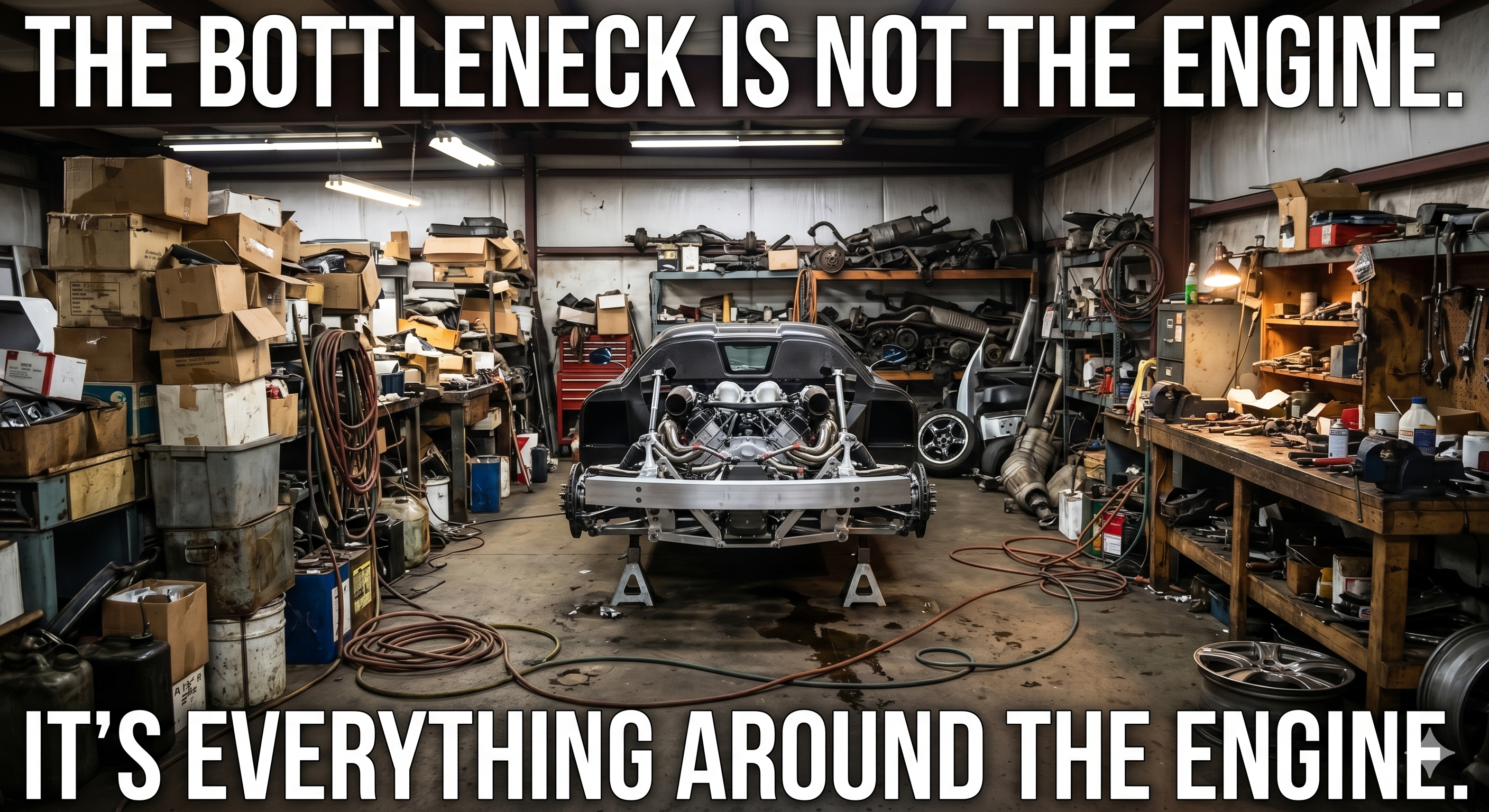
They are almost never on the wrong model. MIT’s NANDA initiative recently studied 300 enterprise AI deployments and found that 95% of pilots produced no measurable business return, and the cause was not model quality. The newest release from any of the major providers will run circles around what your team can extract from it today. The bottleneck is not the engine. The bottleneck is everything around the engine: the problem you chose, the data you fed it, the context it never had, the rules it does not know, and the people you never trained to use it. Ten things matter more than which model you picked this month. Here they are.
The Foundation
These four shape what your AI is working with. Skip them, and you have given the model nothing solid to stand on.
1. A purpose worth solving for. Start with the problem you are trying to solve. Maybe a specific bottleneck you want to remove. Maybe a high-value problem you have been chasing for years. Either way, name the outcome. Name how you will measure success. AI is useful for exploration, but exploration without a target burns time and goodwill.
2. Good data. Garbage in, garbage out has been a problem since long before AI. It has not gone away. In a world where every competitor has access to the same models, your data is what makes your results different from theirs. If your data is messy, scattered, or contradictory, the model will make confident-sounding decisions on top of all of it.
3. Context. AI knows what it has been trained on, which is mostly the public internet. It does not know your business. It does not know your KPIs, your standards, your client history, your unwritten conventions, or the deal that fell apart last quarter. Without that context, the model is guessing in a well-spoken voice. Building shared, reusable context is one of the highest-leverage things a growing business can do, and it sits at the center of how we structure AI adoption in the Kendall Framework.
4. Rules and governance. Context tells AI about your world. Rules tell it how to behave inside that world. What is in bounds. What is off limits. How you keep score. This includes formal governance, but also the quieter conventions every team has and rarely writes down. If you do not tell AI your rules, do not be surprised when it breaks them.
The People
The model gets the headlines. Your team determines the results.
5. The human side. There is a lot going on under the surface of every AI initiative. Fear of being replaced. Excitement about new ways to work. Skepticism from people who have seen technology promises fail before. Quiet hope from people who feel buried in repetitive work. Treating an AI rollout like a software install will miss all of it. The change management is the work.
6. Training your team. Handing out tools and asking people to experiment is one of the most expensive ways to roll out AI. People need real training. They need guidelines, examples, and time to build skill. Train them, set the rules, and then unleash them. You will be surprised by what your team can do when they are not guessing.
7. Sharing wins and losses. Why have every person on your team learn from their own mistakes when they can learn from someone else’s? Create a forum, an internal channel, a monthly review, anything that lets people share what worked and what did not. Mistakes are fine. Repeating other people’s mistakes is wasteful. Celebrating wins is what builds momentum.
The Judgment
Using AI well takes judgment. These three are where that judgment matters most.
8. Writing good prompts. A strong prompt is a clear instruction with the right context attached. The difference between a mediocre prompt and a strong one is measurable in time saved, accuracy gained, and rework avoided. Treat prompt craft as a skill your team builds, not something they pick up by osmosis.
9. Knowing when AI helps and when it does not. AI is a powerful tool, not the only tool. Some problems are better solved with a spreadsheet, a phone call, or a process change. Some are already solved by features inside software you already pay for. Reaching for a new model every time is how you end up reinventing wheels.
10. Getting outside help when you need it. The organizations that get the most out of AI usually bring in someone who has done this before. Not because they cannot figure it out, but because the cost of figuring it out alone is months of false starts. An outside guide accelerates the work, flags the mistakes you are about to make, and keeps the initiative honest.
The Real Leverage
Switching to the newest model gives you a marginal lift. The ten things above give you compounding returns, regardless of which model you happen to be using when you start.
If your AI initiative has stalled, the answer is almost never in the next release notes. It is in the work above.